Exterior Painting
An exterior repaint in Sydney is a weather product. Salt, UV and rain decide how long it lasts, and preparation decides whether it lasts at all.
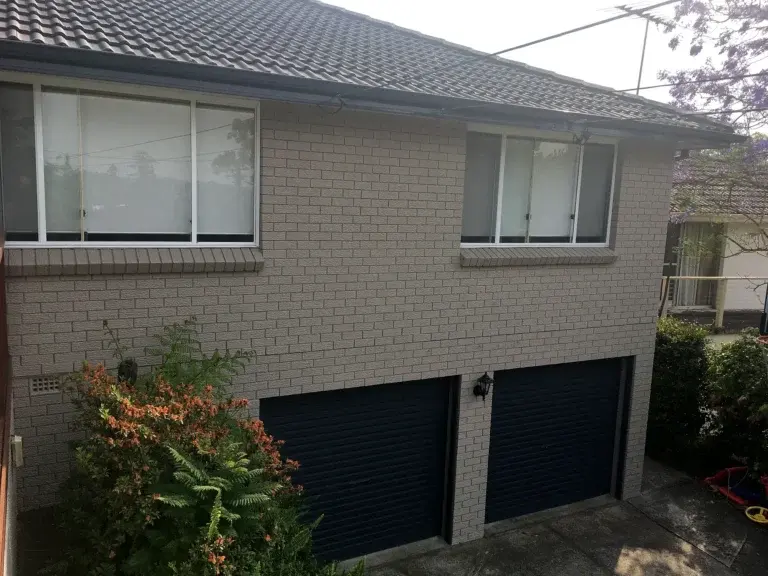
why exteriors fail early
Almost every premature exterior failure we’re called to look at comes from one of three things: paint applied over chalky, unwashed substrate; bare timber or render that was never primed; or a coating chosen for price rather than for the exposure. None of those show up on handover day. All of them show up in year two or three.
Sydney makes it harder. A coastal facade is in a constant salt spray, a western-facing wall takes UV that degrades the binder before the colour fades, and the south side grows mould in the shade. The same house often needs a different answer on each elevation.
what proper preparation looks like
Pressure cleaning isn’t the preparation, it’s the start of it. Chalking has to come off, mould has to be killed rather than washed, flaking has to be scraped back to a sound edge and feathered, and every bare patch has to be primed with something that suits what is underneath. Render, weatherboard, fibro, brick and metal each want a different primer.
Gaps around windows, door frames and joints get raked out and sealed with an exterior-grade flexible sealant, because that joint is where the water gets in and no amount of topcoat fixes it.
the system, not the tin
What protects a house is the system — the primer, the number of coats and the film build together. A premium topcoat over no primer is worse than a mid-range system applied properly. We specify the whole system in the quote, and we name it, so you can compare quotes on something real instead of on a number.
Done properly, an exterior repaint in Sydney should give you a decade or thereabouts before it needs doing again, and longer on sheltered elevations. Done badly, three years.
what decides the price and the timing
Best suited to rendered, brick, weatherboard and fibro homes, including coastal properties and homes facing hard western sun.
the price depends on
- The number of storeys and how the walls are reached, including scaffold
- The surface: render, brick, weatherboard, fibro or cladding
- Repairs: render cracks, timber rot and failed sealant
- Exposure to salt and sun, which decides the coating system
- Whether eaves, gutters, fascias, windows and doors are included
the timing depends on
- Weather: coatings need dry surfaces and suitable temperatures
- Washing down and drying before preparation
- Repairs found once loose paint comes off
- Access equipment bookings
That is why every quote is written and itemised after a site walk, never a number over the phone. Ask for a quote or call 0423 533 883.
how the job runs
- 01Inspection and written scopeEvery elevation assessed for substrate, exposure and existing failure, with photographs.
- 02Access set upLadders, scaffold or an EWP as the height and the pitch require, set up safely rather than improvised.
- 03Pressure cleanThe whole exterior washed down, chalking and dirt removed, mould treated rather than rinsed.
- 04Scrape, sand and repairFlaking taken back to a sound edge and feathered, timber rot identified, holes and cracks filled.
- 05Seal and caulkWindow and door perimeters, joints and penetrations raked out and sealed with exterior-grade flexible sealant.
- 06PrimeEvery bare surface primed with a primer matched to the substrate — not one primer for the whole house.
- 07Two topcoatsApplied at the manufacturer’s spread rate, in the right weather window, elevation by elevation.
- 08Inspect and cleanWalk-around with you, touch-ups closed out, site left clean and access equipment removed.
what is included, and what isn’t
included as standard
- Elevation-by-elevation inspection and written scope
- Access equipment appropriate to the height and pitch
- Full pressure clean and mould treatment
- Scraping, sanding and feathering of all flaking coatings
- Filling, and minor timber repair where it’s sound to do so
- Raking out and re-sealing of window and door perimeters
- Substrate-matched priming of all bare surfaces
- Two full topcoats in a named exterior system
- Gutters, fascias, barges and downpipes where the scope names them
- Site clean and full waste removal
- Five-year workmanship guarantee in writing
not included
Quoted separately if your job needs it, so nothing arrives as a surprise variation.
- Timber replacement beyond minor repair — quoted separately
- Roof painting
- Rendering, cladding and structural repair
- Concrete cancer and spalling remediation
- Asbestos testing or removal — we’ll refer you to a qualified assessor or licensed removalist
- Fixing the source of water ingress behind a damaged surface
why you can believe any of this
frequently asked questions
How long will an exterior repaint last?
Properly prepared and correctly specified, generally around a decade in most of Sydney, less on an exposed coastal elevation and more on a sheltered one. Poorly prepared work can fail in three.
What time of year is best?
Spring and autumn are ideal. We paint through summer and winter too, but we work to the product’s temperature and humidity window rather than pushing a coat on a day that won’t cure.
Do you pressure clean first?
Always. Painting over chalk, dirt or mould is the single most common cause of early failure, and it’s invisible until it isn’t.
Can you paint render, weatherboard, fibro and brick?
Yes, and each gets a different primer and sometimes a different topcoat. Using one primer across a mixed-substrate house is a shortcut that shows up later.
Do you paint gutters and fascias as well?
Gutters, fascias, barges and downpipes, yes — they’re usually in the exterior scope. We don’t take on roof painting.
How do you deal with mould on the shaded side?
Treat it, not just wash it. A mould wash that kills the spores, then a system with a mould-inhibiting additive where the elevation warrants it.
Will rain during the job ruin it?
Not if the programme respects it. We watch the forecast and we don’t put a coat on ahead of rain that’ll hit it before it cures. That sometimes means a lost day, which is a better outcome than a lost coat.
Do you need scaffolding?
Sometimes. Two storeys, steep ground or a difficult pitch usually do. If scaffold is needed it’s in the quote as a line item, not a surprise variation.
get a quote
tell us about the job.
Two minutes now, a proper answer within one business day — from a person, not a call centre.
- 1we come back to youwithin one business day, with the questions a quote needs
- 2site walkwe measure, check the surfaces and test the existing paint
- 3written, itemised quoteroom by room, product by name — the price on the quote is the price on the invoice