Interior Painting
The finish you notice on an interior repaint is almost entirely preparation. Anyone can roll a wall. The difference is what happened in the two days before the roller came out.
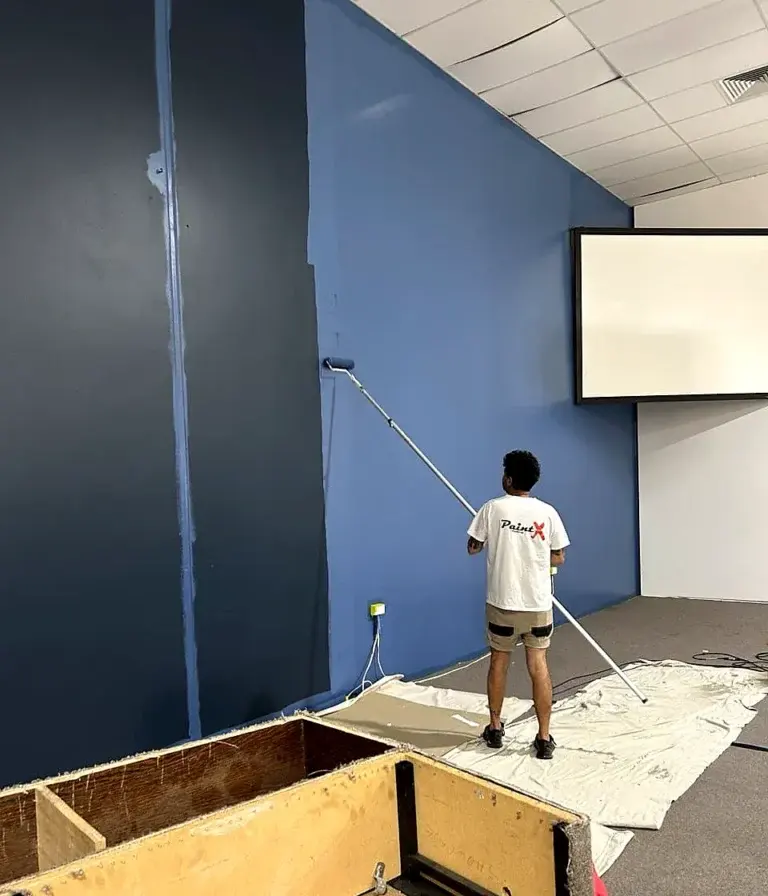
preparation is the job
A room that looks flawless in the afternoon light has had its cracks raked out rather than filled over, its patches sanded flush rather than feathered by eye, and its bare filler spot-primed so the topcoat doesn’t flash. Skip any of those and the wall looks fine on handover day and wrong by the first weekend, when the sun comes across it at a low angle.
We wash walls before we sand them, because sanding a greasy wall drives the grease in. We fill, sand, dust off and prime, and only then do we open the colour. It’s slower and it’s the entire reason a professional repaint looks different from a good weekend’s work.
living in the house while it happens
Most interior repaints happen around a family. We work room by room rather than opening up the whole house, mask and drop-sheet properly instead of draping, and put the furniture back at the end of each day where we reasonably can.
Low-VOC water-based products mean you can sleep in a room painted that afternoon. Doors, frames and skirtings are done in water-based enamel, which is harder than it used to be and doesn’t yellow the way the old solvent enamels did.
colour, and how to not regret it
Whites are the ones people get wrong, because there’s no such thing as a neutral white. A north-facing room and a south-facing room will read the same white as two different colours, and a sample card held against an existing wall tells you almost nothing.
Colour looks different on your own walls, in your own light, than it does on a chip in a shop. Once your quote is approved, our colour consultancy works through it with you at home — a single room or the whole scheme — before anything is ordered.
what decides the price and the timing
Best suited to occupied homes, rentals between tenancies, and renovations where the walls are being finished last.
the price depends on
- The number of rooms, and ceiling heights including voids and stairwells
- Wall condition: cracks, patches and earlier poor workmanship
- Colour changes: going from dark to light can need more coats
- Whether ceilings, doors, frames and skirting boards are included
- Furniture to move and protect
- Older paint layers that may contain lead in homes built before 1970
the timing depends on
- How much of the house you are living in while we work
- Patching, sanding and drying before the first coat
- The number of coats each surface needs
- Access to each room on the planned days
That is why every quote is written and itemised after a site walk, never a number over the phone. Ask for a quote or call 0423 533 883.
how the job runs
- 01Walk-through and quoteRoom by room, with the surfaces, coat counts and products written out so you know what you’re comparing.
- 02Colour and samplingOnce the quote is approved, colour consultancy in your own home and your own light, before anything is ordered.
- 03ProtectFurniture moved and covered, floors drop-sheeted, fixtures and hardware masked or removed.
- 04Repair and prepareWash, rake out and fill cracks, patch holes, sand flush, dust off.
- 05PrimeSpot-prime all filler and bare substrate; full prime where the colour change or the surface demands it.
- 06Ceilings, then walls, then trimIn that order, every time, because it’s the only sequence where each step protects the last.
- 07Two topcoatsTwo full coats as standard. A third where a deep or a very light colour genuinely needs it, quoted up front rather than skipped.
- 08Clean and inspectHardware back on, floors cleaned, then we walk it with you under the lights you actually use.
what is included, and what isn’t
included as standard
- Room-by-room written scope with products and coat counts
- Colour consultancy once your quote is approved
- Furniture moved and protected, floors fully drop-sheeted
- Hardware and fixtures removed or masked
- Wash down, crack repair, filling and sanding
- Spot priming of all filler and bare surfaces
- Two full topcoats to walls and ceilings
- Water-based enamel to doors, frames, skirtings and architraves
- Low-VOC products throughout so the house stays liveable
- Daily tidy and a full clean on completion
- Five-year workmanship guarantee in writing
not included
Quoted separately if your job needs it, so nothing arrives as a surprise variation.
- Plaster replacement and major wall repairs — quoted separately
- Wallpaper removal unless the scope names it
- Mould remediation beyond surface treatment — see mould removal
- Feature finishes, limewash and specialist coatings unless quoted
- Moving pianos, safes and anything needing more than two people
- Repairs to water damage where the source hasn’t been fixed
why you can believe any of this
frequently asked questions
How long does it take to paint a house interior?
A single room is usually a day. A two-bedroom apartment is typically three to five days. A four-bedroom house with trim is generally one to two weeks. Occupied homes take slightly longer because we stage the work around you.
Do I need to move out?
No. We work room by room, use low-VOC products, and leave every space usable at the end of the day. Most of our interior clients stay put for the whole job.
How many coats do you apply?
Two full topcoats as standard, over spot-primed repairs. Some colours — deep reds, strong yellows, or covering a dark wall with white — genuinely need a third, and we’ll tell you that in the quote rather than discovering it halfway.
Do you move the furniture?
Yes, we move and cover what two people can safely handle, and put it back as each room finishes. Anything heavier than that we’ll tell you about before the day.
Can you help with choosing colours?
Yes. Once your quote is approved, our colour consultancy works through it with you in your own home and your own light — one room or a full scheme across the house.
What paint do you use?
Premium trade-grade products chosen for the surface, and named in your quote so you can hold us to them. Water-based enamel on trim, washable low-sheen on walls, flat on ceilings unless you want otherwise.
Will it smell?
Far less than it used to. Modern water-based systems are low-VOC and most rooms are comfortable within a couple of hours with a window open.
What if I find something wrong after you leave?
Tell us. Touch-ups in the first weeks are part of the job, and the workmanship guarantee runs for five years in writing.
get a quote
tell us about the job.
Two minutes now, a proper answer within one business day — from a person, not a call centre.
- 1we come back to youwithin one business day, with the questions a quote needs
- 2site walkwe measure, check the surfaces and test the existing paint
- 3written, itemised quoteroom by room, product by name — the price on the quote is the price on the invoice