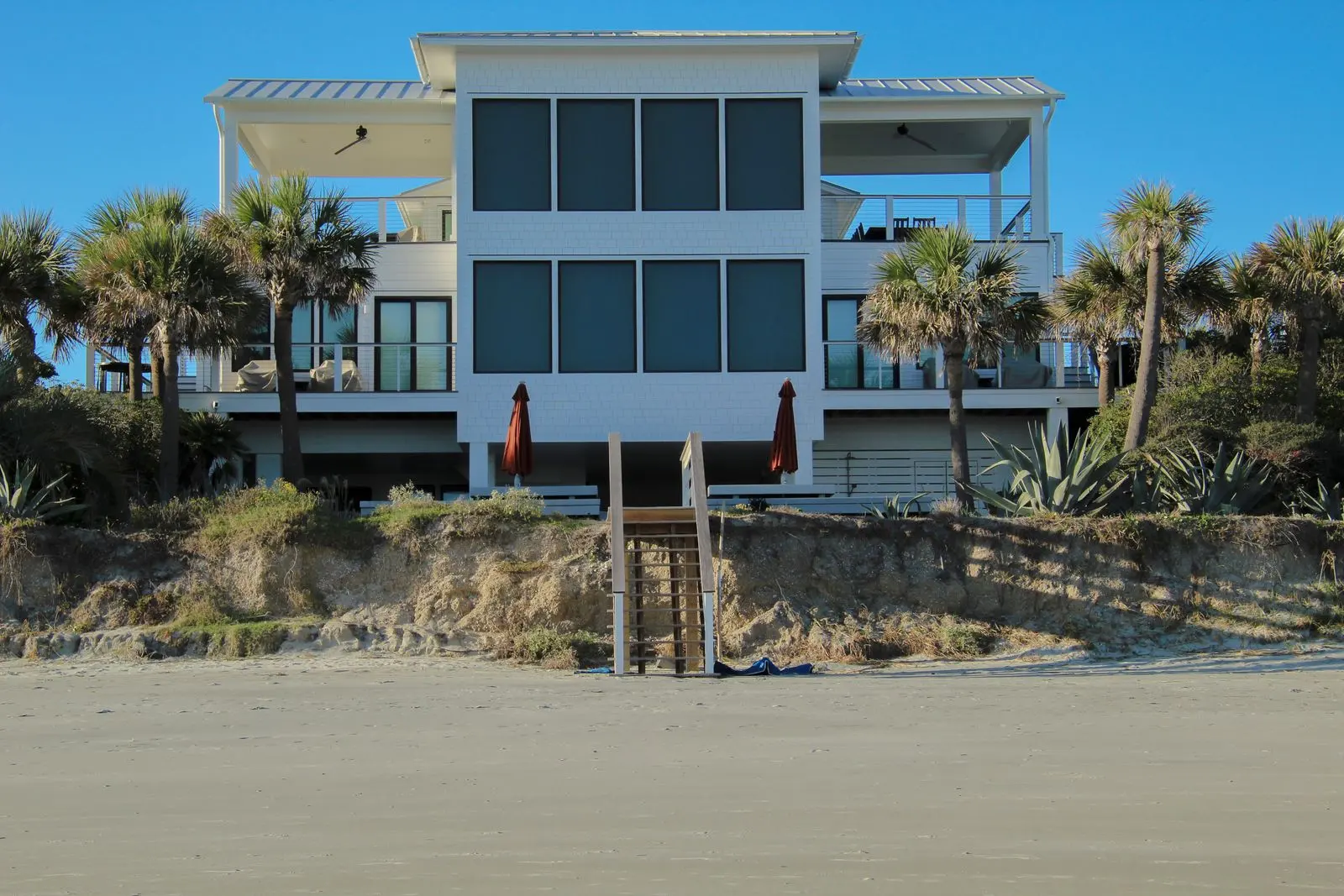
Painting a Coastal Home in Sydney: Salt, Sun and Paint That Lasts
A home near the ocean can look bright and fresh for a long time, but salt air, strong sun and wind make the job of the paint harder. The repaints that last on the coast come down to three things: washing the salt off before any paint goes on, treating rust and bare timber properly, and choosing an exterior paint system made for exposed sites. Here is how that works for coastal homes across Sydney.
What salt air does to exterior paint
Salt is carried inland by sea spray and onshore wind, and it settles as a fine film on walls, window frames, railings and gutters. Salt attracts moisture, so it keeps surfaces damp for longer, and that moisture works its way into any crack or gap in the paint.
On metal, salt speeds up corrosion. Rust shows first on nail and screw heads, balustrades, gate hardware and steel lintels above windows and doors, and it can bleed brown streaks down freshly painted walls. On timber, constant wetting and drying makes the boards move, so paint cracks along joins and end grain. On render, moisture behind the paint leads to blistering and flaking.
Sheltered spots such as eaves, verandah ceilings and the undersides of balconies are not rinsed by rain, so salt builds up there and corrosion often starts there first. A gentle fresh-water rinse of these areas now and then helps between repaints.
Sun, wind and sand
Coastal homes also cop strong UV (the ultraviolet part of sunlight that breaks down paint). Over time it causes chalking, a powdery film you can wipe off with your hand, and colours fade. Wind-blown sand wears the surface, and humid air helps mould grow on shaded walls. Our guide to how often to paint a house exterior covers the general warning signs on any Sydney home.
Signs your coastal home is due for a repaint
- Rust stains. Brown streaks running from fixings, railings or window frames.
- Chalking and fading. Especially on sun-facing walls.
- Blistering or bubbling. Moisture or salt trapped under the paint.
- Peeling around windows and doors. Where water gets in at joins.
- Mould or dark spotting. On shaded walls, eaves and under balconies.
How a coastal repaint works
The steps below are the usual order for a full exterior repaint near the water. The exact products, coats and drying times come from each product’s data sheet.
- Site walk. We look at every wall and fixing, note rust, flaking, cracks and older coatings, and flag anything that needs testing before work begins.
- Protection. Gardens, paths, decks and windows are covered, and drop sheets catch paint chips.
- Washing off the salt. Walls, eaves and railings are cleaned with fresh water and a suitable cleaner, then left to dry fully. Paint will not grip well over a salty film, so this step matters more on the coast than anywhere else.
- Treating mould. Mould is killed and cleaned off, not painted over.
- Rust treatment. Loose rust is removed back to sound metal, and bare steel is primed with a rust-inhibiting primer. Badly corroded nails and screws may need replacing.
- Repairs. Cracks in render are filled, gaps around frames are sealed with an exterior-grade sealant, and damaged timber is repaired or replaced.
- Priming. Bare timber, filled areas and new render get the right primer or sealer so the topcoats bond.
- Topcoats. Usually two coats of a quality exterior paint, applied in calm, dry weather, out of direct midday sun, and finished early enough that evening dew or salt spray does not settle on wet paint.
Choosing paint and colour near the sea
For walls, a good-quality 100% acrylic exterior paint is the usual choice. Acrylic stays flexible as surfaces heat up, cool down and move, and it holds its colour well in strong sun. Some are made for harsh or coastal conditions; check the product’s data sheet for where it is designed to be used.
Metal needs its own system: a rust-inhibiting primer under a topcoat suited to metal, rather than wall paint on its own. Timber needs a primer suited to the species and its condition.
Colour matters too. Dark colours absorb more heat, which puts extra stress on timber and on the paint itself, while lighter colours stay cooler and tend to show chalking and fading less. If you are torn between shades, our colour consultancy is available once your painting quote is approved, as part of the job.
Older coastal homes: lead paint and asbestos
Many beachside homes are older, and two hidden risks need checking before any scraping, sanding or washing starts.
Lead paint. The NSW Government’s LeadSmart program says lead paint was used in most homes built in Australia before 1970. It advises wet scraping and wet sanding rather than dry methods, keeping pregnant and breastfeeding women and young children away from the work, and hiring a professional trained in safe lead paint work practices.
Asbestos. SafeWork NSW notes that asbestos cement sheeting was commonly used in buildings from the 1940s to the late 1980s, and that homes built before the late 1980s may contain asbestos. Fibro walls, eaves linings and older beach shacks are common places to find it. If you think a material is asbestos, treat it as if it is: do not sand, drill or pressure-wash it yourself, and call a licensed asbestos professional to assess it.
Coastal apartments and strata buildings
For unit blocks and townhouses, the outside walls, balconies and railings are usually common property, so the owners corporation organises the repaint and approves colours. Check with your strata manager before planning any work. Our strata painting page explains how we work with committees and building managers.
What affects the quote
- Size, height and access. Multi-storey walls and steep beachside blocks may need scaffolding.
- Condition. How much rust, flaking paint, cracked render or damaged timber needs work.
- Metalwork. The amount of railings, balustrades, gates and fixings to treat.
- Older-home checks. Lead paint and suspected asbestos call for testing and safe work methods.
- Product choice. Primers, topcoats and any specialist coatings the site needs.
Every home is different, so we give a written, itemised quote after a site walk.
How PaintX can help
Our exterior painting team prepares and paints coastal homes right across Sydney, including the Northern Beaches and the Eastern Suburbs. We hold NSW contractor licence 393679C and carry $20 million public liability insurance, and we use low-VOC paints wherever the job allows.
Ready for a written quote?
Call 0423 533 883, or tell us about the job and we will reply within one business day. We give a written, itemised quote after a site walk, and our work comes with a five-year workmanship guarantee.
Sources: NSW Government LeadSmart – Renovating and maintenance · SafeWork NSW – Finding, identifying and recording asbestos
frequently asked questions
What is the best exterior paint for a house near the beach?
For most walls, a good-quality 100% acrylic exterior paint, ideally one made for harsh or coastal conditions, over the right primer. Metal needs a rust-inhibiting primer and a topcoat suited to metal. The best system depends on the surface and how exposed it is, so we confirm it on the site walk.
Do coastal homes need repainting more often?
Usually, yes. Homes close to the water and facing onshore winds tend to show wear sooner than homes inland, especially on metalwork and sun-facing walls. Good preparation and the right products help a repaint last.
Can you paint over rust?
Not as it is. Loose rust has to be removed back to sound metal and the bare steel primed with a rust-inhibiting primer before the topcoats go on. Paint over active rust soon fails. Badly corroded fixings may need replacing.
get a quote
tell us about the job.
Two minutes now, a proper answer within one business day — from a person, not a call centre.
- 1we come back to youwithin one business day, with the questions a quote needs
- 2site walkwe measure, check the surfaces and test the existing paint
- 3written, itemised quoteroom by room, product by name — the price on the quote is the price on the invoice