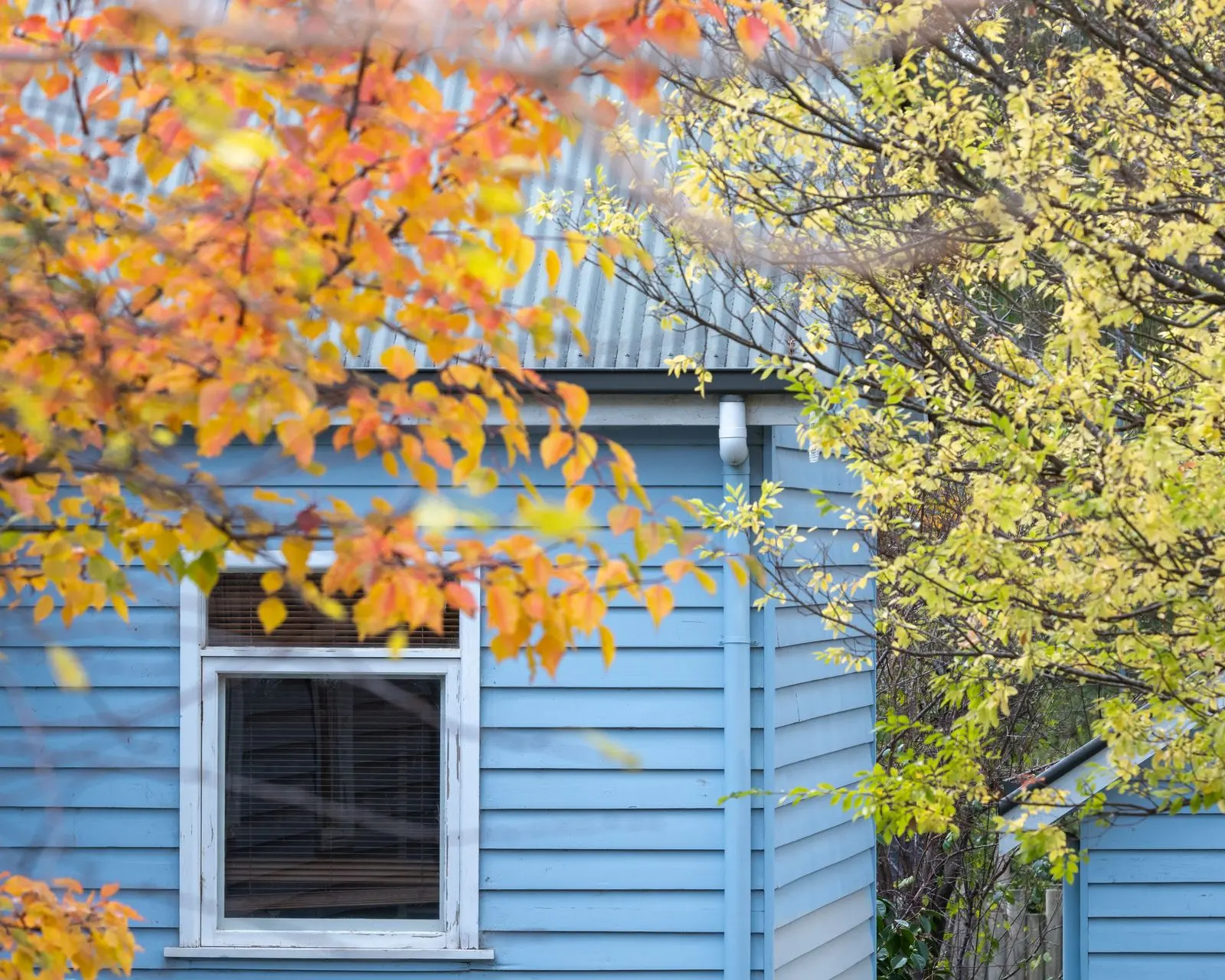
Weatherboard House Painting: Prep, Paint and What to Check First
A weatherboard house can be repainted beautifully, and the result lasts when the preparation is right. That means washing the walls, scraping back loose paint, repairing or replacing damaged boards, priming any bare timber and finishing with an exterior paint made for timber. Older homes also need a check for lead paint and fibro before anyone starts scraping.
Why weatherboards need a different approach
Weatherboards are overlapping horizontal timber boards. Timber moves: it swells as it takes on moisture and shrinks as it dries, so the paint on it has to flex with it. Each board also has a bottom edge and cut ends where water gets in first, which is why paint usually fails along the edges before it fails on the face of the board.
Sun-facing walls take the most punishment, and in Sydney that is usually the north and west sides. They often need a repaint sooner than the rest. Our guide to how often to paint a house exterior covers the general signs to watch for on any home.
Signs your weatherboards are due for a repaint
- Peeling or flaking paint. Look along the bottom edges of the boards and around windows and doors first.
- Chalking. A powdery film that comes off on your hand when you rub the wall. It means the paint’s binder, the part that holds the coating together, is breaking down.
- Cracks along the grain. Fine cracks that follow the timber, or gaps opening at joins, corners and around trims.
- Bare or grey timber. Unprotected timber weathers quickly and can split.
- Soft spots. Areas that feel spongy, or where a screwdriver sinks in easily, can point to rot.
Older weatherboard homes: lead paint and fibro
Many Sydney weatherboard homes were built well before 1970. The NSW Government’s LeadSmart guidance says lead paint was used in most homes built in Australia before 1970, and that it can be a hazard even before renovations start, when it chips off around windows and doors. It advises keeping pregnant and breastfeeding women and young children away from renovations, never using open-flame torches on lead paint, and using wet scraping and sanding. It recommends hiring a professional trained in safe lead paint work practices to remove old paint. Our article on lead paint in older Sydney homes explains more.
Some weatherboard homes also have fibro, or fibre-cement sheeting, on extensions, gables, eaves or enclosed verandahs. SafeWork NSW notes that asbestos cement sheeting was commonly used in building materials from the 1940s to the late 1980s, and that if you think something is asbestos you should treat it as asbestos and call a licensed asbestos professional. Don’t sand, scrape, pressure-wash or paint suspect sheeting yourself. We point out anything that needs checking on the site walk.
How a weatherboard repaint works
The steps below are the usual order for a full exterior repaint. The exact products, coats and drying times come from each product’s data sheet.
- Site walk. We look at every wall, note flaking, rot, gaps and older coatings, and flag anything that needs testing before work begins.
- Protection. Gardens, paths, decks and windows are covered, and drop sheets are laid so paint chips are caught and collected.
- Washing. The walls are cleaned of dirt, cobwebs and mould so the new paint can bond. Older paint is washed gently rather than blasted.
- Scraping and sanding. Loose paint is removed back to a sound edge, and the edges are feathered so they don’t show through the new coats. Where lead paint may be present, wet methods are used.
- Repairs. Split or rotten boards are repaired or replaced, nail heads are punched and filled, and gaps at joins, corners and trims are sealed with a paintable exterior sealant.
- Priming. Bare timber gets a primer made for exterior timber. Primer seals the wood and gives the topcoats something to grip.
- Two topcoats. Two full coats of exterior paint go on, including the bottom edges of the boards where water collects.
- Final walk-through. We check the work with you, touch up anything missed and leave the site clean.
Choosing the paint and the colour
Most weatherboard repaints use a water-based exterior acrylic, which stays flexible as the timber moves. Older layers of oil-based enamel can need a specific primer before acrylic goes over them, which we confirm on the site walk.
Sheen matters too. A low-sheen finish is a popular choice for the boards themselves because it softens minor surface marks, while window frames, doors and trims are often done in semi-gloss or gloss so they are easier to wipe clean. Our paint sheen guide explains how each finish behaves.
Very dark colours absorb more of the sun’s heat than light ones, and on timber that can mean more movement. Some exterior paint ranges offer heat-reflective versions of dark colours for this reason, so check the product’s data sheet before settling on a near-black. If you would like help with the scheme, colour consultancy is available as part of the job once your painting quote is approved.
Timing a repaint around the weather
Exterior paint needs the right conditions to cure, which means to harden fully. Each product’s data sheet sets limits on air and surface temperature, and on painting before rain or while dew is still on the boards. In practice that means avoiding walls baking in afternoon sun, and cold, damp mornings. Work goes ahead through the year when the day’s conditions suit the product.
Weatherboard homes generally take longer to repaint than a similar brick home, because there are far more edges to prepare and paint. We’ll confirm the schedule on the site walk.
What affects the quote
- Size, height and access. Two-storey walls and sloping blocks may need scaffolding.
- Condition. How much old paint has to come off, and how many boards need repair or replacement.
- Older-home checks. Lead paint and suspect fibro call for testing and safe work methods.
- Detail. The number of colours, windows, doors, trims, fretwork and verandah posts.
- Product choice. Primers, topcoats and any specialist coatings the timber needs.
Every home is different, so we give a written, itemised quote after a site walk.
How PaintX can help
Our exterior painting team prepares and paints weatherboard homes across Sydney. We hold NSW contractor licence 393679C and carry $20 million public liability insurance, and we use low-VOC paints wherever the job allows. Read more about PaintX.
Ready for a written quote?
Call 0423 533 883, or tell us about the job and we will reply within one business day. We give a written, itemised quote after a site walk, and our work comes with a five-year workmanship guarantee.
Sources: NSW Government LeadSmart – Renovating and maintenance · SafeWork NSW – Finding, identifying and recording asbestos
frequently asked questions
Can you paint over old paint on weatherboards?
Yes, as long as the old paint is sound and clean. It is washed, lightly sanded so the new paint can grip, and any loose or flaking paint is removed back to a firm edge first. New paint over flaking paint will fail along with it. On homes built before 1970, the old paint is treated as possible lead paint and wet methods are used.
Should rotten weatherboards be replaced before painting?
Yes. Paint won’t fix rot, and it can hide the problem while it spreads. Small soft areas can sometimes be cut back and filled; badly damaged boards are replaced and primed. We’ll confirm what each board needs on the site walk.
Can we stay at home while the outside is painted?
Usually, yes. Most of the work happens outside, though some windows may be covered or kept closed while they are painted. On older homes where lead paint may be disturbed, NSW LeadSmart advises keeping pregnant and breastfeeding women and young children away from the work area, so we plan the order of work with you.
get a quote
tell us about the job.
Two minutes now, a proper answer within one business day — from a person, not a call centre.
- 1we come back to youwithin one business day, with the questions a quote needs
- 2site walkwe measure, check the surfaces and test the existing paint
- 3written, itemised quoteroom by room, product by name — the price on the quote is the price on the invoice